Spice Gardens Sri lanka

Spice Gardens in Sri Lanka


One must visit a Spice Garden in Sri Lanka to get an insight into the long cherished spice history of the island. Spice gardens in the hill capital ,Matale, Mawanella etc. give fascinating experiences to spice lovers from all over the world. In fact most of the tourists visiting these gardens take back with them a memorable experience after seeing and feeling Sri Lankan spices.
Sri Lanka which was then known as Taprobane, was world renowed for its high Quality Spices. It is believed even during ancient times the Greeks, Romans and the Arabic kept up their connections with Sri Lanka through the spice trade. In the sixteenth century Ceylon, as Sri lanka was then known, was found by Portuguese who soon started exchanging cinnamon and different spices with the kings of Ceylon. They were followed by the Dutch and English who contributed their share to shape Sri lanka's spice history. In fact in the Western part of the country which was mostly frequented by the Europeans, the uniqueness of the dishes can be tasted even today.

Among the mostly exchanged spices, cinnamon takes the first place.The Dutch loved cinnamon and even went to the extent of imposing certain laws to punish those who fell or harmed cinnamon trees. Among the other much valued sri lankan spices are  cloves, cardamom, nutmeg, mace and pepper, for which Sri Lanka is famous all over the world.


  pepper corns                               


New Ranweli Spice Garden Sneak a Peek Pepper Corns
Pepper Corns


vanilla


New Ranweli Spice Garden Sneak a Peek Vanilla
Vanilla


nutmeg

New Ranweli Spice Garden Sneak a Peek Nutmeg
Nutmeg

Aloe Vera                              

New Ranweli Spice Garden Sneak a Peek Aloe Vera
Aloe Vera

Cocoa

New Ranweli Spice Garden Sneak a Peek Cocoa
Cocoa


World renowned chef Peter Kuruvita visits Ranweli Spice Garden


ranweli spice garden my sri lanka


Jardins d'épices Sri Lanka

 Jardins d'épices Sri Lanka

click here for English

 
sri lanka spice garden
cocoa in spice garden


Le Sri Lanka est connu dans le monde entier pour ses épices et ses herbes rares. Au New Ranweli Spice and Herbal Garden, vous aurez la chance de voir comment des épices comme le curcuma, les grains de poivre, les clous de girofle, la cardamome, la muscade, la vanille, la cannelle, le cacao, l'aloès Vera, etc. sont cultivés dans leur environnement naturel.

Il faut visiter un jardin d'épices au Sri Lanka pour avoir un aperçu de la longue histoire des épices de l'île. Les jardins d'épices de Benthota, Kandy, Matale, Mawanella et Colombo offrent des expériences fascinantes aux amateurs d'épices du monde entier. la plupart des touristes visitant ces jardins ramènent avec eux une expérience mémorable après avoir vu et senti les épices sri lankaises.


Pour commander nos produits du jardin d'épices en 'Europe

Envoyez-nous un email ou un message sur watsapp

Payez en toute sécurité avec PayPal


 Email :  spicegardencli@gmail.com

Watsapp: +94-7799-59-135

Gewürzgarten sri lanka

 Gewürzgarten sri lanka

 click here for English

 
Gewürzgarten sri lanka
Gewürzgarten sri lanka            

Sri Lanka ist weltbekannt für seine seltenen Gewürze und Kräuter.  Gewürze wie Kurkuma, Pfefferkörner, Nelken, Kardamom, Muskatnuss, Vanille, Zimt, Kakaobohnen, Aloe Vera, uvm.
können in ihrer natürlich wachsenden Umgebung im "New Ranweli Spice and Herbal Garden" bewundert werden.
Bei einem Aufenthalt in Sri Lanka darf ein Besuch in einem Gewürzgarten nicht fehlen, um einen einzigartigen Einblick in die lange Geschichte der Kräuter und Gewürze der Insel zu bekommen. Kräutergärten in Benthota, Kandy, Matale, Mawanella und Colombo bieten Gewürzliebhabern aus aller Welt faszinierende Erlebnisse.
 
 
Gewürzgarten sri lanka
 
Die meisten Touristen, die diese Gärten besucht haben, nehmen ein unvergessliches Erlebnis mit nachhause, nachdem sie sri-lankische Gewürze gesehen und gespürt haben.


What is Ayurveda?

Ayurveda


sri lanka spice garden ayurvedic products
Traditional crusher used in Ayurveda


Ayurveda is defined as 'the science of life' according to many Ayurvedic physicians and scholars. But no one has ever been able to give a satisfactory interpretation of the word for the average reader. Nevertheless Ayurveda is known as a system of indigenous medicine unique to the Asia. Many consider it as some sort of an alternative way of treatment of various diseases and ailments. This system of medicine is more than 2000 years old. Ayurveda is the control of upaveda or "assistant information" in Vedic convention. The sources of Ayurveda are found in the Atharvaveda, which contains 114 psalms and spells portrayed as supernatural cures for illnesses. There are likewise different incredible records of the birthplace of Ayurveda, for example that it was derived from Dhanvantari (or Divodasa) from Brahma. Ayurvedic ways of treatments use spices,herbs and oils. 
In ancient times, a portion of the ideas of Ayurveda have been found following the seasons of Indus Valley Human progress and earlier. Ayurveda names three natural substances, or doshas (called Vata, Pitta and Kapha), and insists that the balance of the doshas results in well-being, while the imbalance results in  sickness. Ayurvedic physicians had created different restorative arrangements and surgical systems by the medieval period.

King Buddadasa who reigned from 341 – 370 AD in sri lanka was known as a great physician who practiced Ayurvedic medicine in sri lanka. There are a lot of legends woven around him. The way he treated and operated on both humans and animals. He is known as a king who even treated poisonous snakes using his Ayurvedic knowledge. nowadays there are many Ayurvedic hospitals in sri lanka. Both local and foreign patients come to these hospitals to get treatment. One noteworthy family in sri lanka that practices Ayurvedic medicine is Horavila family Better known as horiwila weda mahaththaya. He has taken ayurveda in sri lanka to a whole new level with his unique treatments using oils and massages.


Cutting edge ayurvedic drug is considered pseudoscientific. some analysts and critics think of it as a proto-science, an unscientific, or trans-science framework instead.
Despite all this criticism by different people , many are the miracles that Ayurveda has performed. Maybe there is no scientific basis to each and every treatment offered by Ayurveda but it has been able to treat some conditions which considered to be incurable by modern medicine. Perfect example can be the number of corona patients who recovered by taking some herbal remedies. still these recoveries are not backed by tests or science but at some point Ayurveda could deliver the goods.

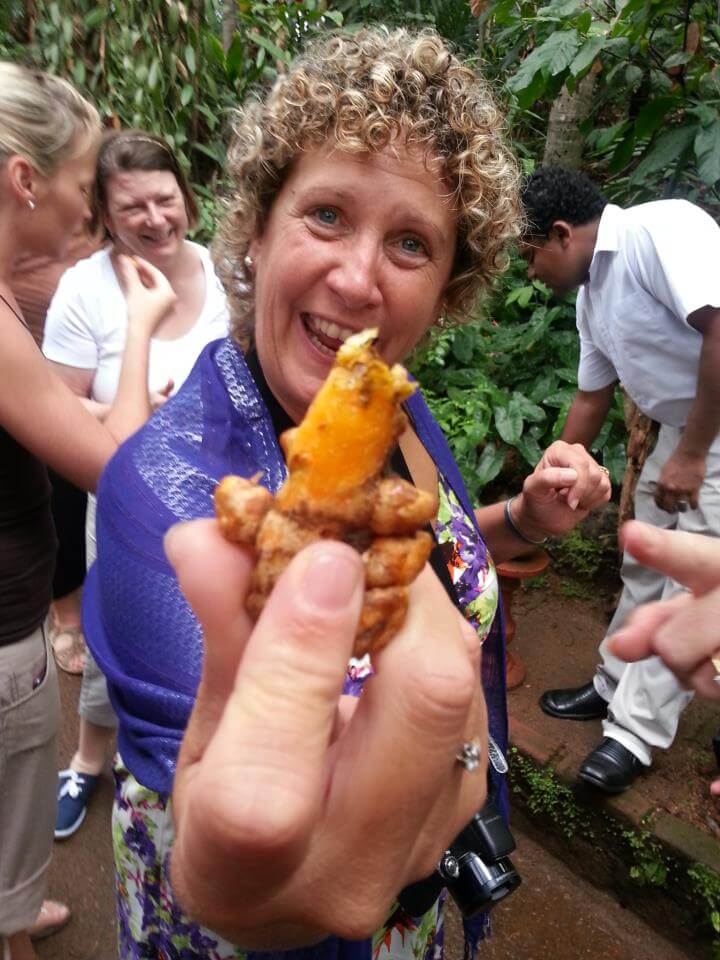
Turmeric aka local saffron at Ranweli Spice Garden


 Turmeric( sri lankan saffron)

 
saffron purchase
Affordable saffron


Turmeric known in Europe as Curcuma, is a rhizomatous herbaceous plant which belongs to the ginger family. In sri lanka for the most part roots of Turmeric is used in cooking and  medicine. people also call this Sri lankan or local saffron. This is because it has most of the attributes of Indian saffron or original saffron which is a luxury. Since Indian saffron is a luxury that many people cannot afford, most of the time people preffer sri lankan saffron which is known as turmeric.

 How Turmeric is processed in sri lanka and India

 
Tumeric plant
Turmeric plants


Mature Turmeric roots can be planted and these roots will turn into a small plant in about 6 months. When Turmeric roots are ready leaves of the plant start to dry and then die. when all the leaves are dead we know that the time is ripe for picking.

These roots are dried  for about 30 minutes in the sun, afterwards they are need to be powdered untill it becomes orange-yellow. And this powder is used all over the world for coloring and as a spice in food and curries.

saffron powder
Tumeric powder


Turmeric has been in use in sri lanka and India for many years and is part and parcel of Ayurvedic or indigenous medicine. Ayurvedic doctors prescribe turmeric powder for skin deseases like psoriasis and gout.  In western medicine they have discovered a pain killer for cancer using turmeric powder. 

A long time ago Turmeric was known as a color and then for its therapeutic and medicinal properties. Turmeric is known as a holy spice in India and has been used as part of different Hindu functions for centuries. Hindu people in Sri lanka also use it for cleansing purposes since turmeric is a good germ killer. Turmeric has assumed an imperative part in Hindu mysticism. The robes of the Hindu priests were generally hued with a yellow color made of turmeric. During Tamil celebration Pongal, an entire turmeric plant with new rhizomes is offered as a thanksgiving to Suryan, the sun god. 

Many are the uses of turmeric when it comes to medicine and religion. As far as sri lanka goes turmeric is a spice that sri lankans cannot cook without. In almost all the dishes of sri lanka there is turmeric or kaha(kaha is the term locals use for turmeric). If you cook a curry with no turmeric in it and serve it to a sri lankan he will be able to tell you that the dish is missing turmeric. That is the kind of place turmeric has when it comes to sri lankans.

In sri lanka there is this potato like plant called 'mannyok'. In some countries this plant is known as 'cassava'. From those days there was a belief among sri lankans that this plant has a poison that can even capable of killing an elephant. And when they cooked this food they advised everyone to cook it without closing the pot and with lots of turmeric powder. Because from those days people knew that turmeric is a good germ killer and an anti poison agent.

Pandan leaves at ranweli spice garden

Pandan leaves

 
spice garden online shop
Pandan leaves at Kandy Spice garden


Pandan leaves or Rampe (Sinhalese term) as it is known in Sri Lanka, is a famous plant all over Asia because of its taste and the smell. But just like curry leaves you can't just take a pandan leaf and eat because it is a little thick and digesting this leaf also is very hard. So one might wonder how exactly to use this spice in cooking. In fact big pieces of pandan leaves are added when cooking and when the curry is cooked we need to take the leaves out. But even if you take these leaves out the curry will have a  lovely aroma and a taste in the dish.

Kandy spice garden
Pamdan leaves in New Ranweli Spice Garden Kandy

Pandan leaf is known for its medicinal or herbal uses as well. Some People boil pandan leaves and drink to treat wounds. Some people as a habit chew panda leaves to get rid of bad breath. It is also a good home remedy for minor headaches, inflammation and so on.

citronella

citronella

kandy ranweli spice garden


Citronella plant is very much common in sri lanka and all over Asia. Indeed, you may even be looking at your own citronella plant in your home garden at this moment. This very much adored plant is basically prized for its strong aroma, which is believed to keep away mosquitoes and flies.


This plant is ordinarily found under various names, for example, citronella plant, mosquito killer according to Sri Lankans, citrosa geranium and Pelargonium citrosum. In spite of the fact that a large number of its names leave the feeling that it contains citronella, which is a typical fixing in bug repellent, the plant is really a mixed bag of scented geranium that essentially delivers a citronella-like fragrance when the leaves are pulverized. The mosquito plant geranium is a hybridized plant that came to fruition from Chinese citronella grass and African geranium.

So the main question still remains. Do citronella plants truly keep away mosquitoes? Since the plant releases its smell when touched, it works best as an anti-agent when the leaves are squeezed and rubbed on the skin as mosquitoes can't stand its strong smell. Not only does citronella extract keep away mosquitoes and flies but also when they sting your skin, you can also apply it on your skin to get rid of the itchiness. It has this amazing healing power to make you feel better once you are stung by a mosquito.

Citronella plant looks just like the lemon grass, but one can distinguish between a citronella plant and lemon grass from the fragrance. Citronella plant has a strong smell whereas lemon grass has a very subtle smell. And the other thing is citronella is not eatable. One must not even attempt to chew a citronella leaf as it is very strong.
These plants need six hours of sunlight for its proper growth. Nevertheless we can plant citronella inside our homes near a window. Because it also has the ability to survive under cold conditions. These plants grow up to 4 feet high and only then it is recommended to pick the leaves for processing.

Chilli at Ranweli Spice Garden

Benefits of Chilly


spicegarden online store
chilly at ranweli spice garden


Chilli plant is a small, bush around 1m in height. this plant is native to Mexico where chilly was used as one of the important spices when it comes to cooking. gradually it spread throughout Europe and became famous in Asia too. Chilli also is one of the widely grown spices in Sri Lanka when it comes to export. Chilli Powder is something people in sri lanka can't do without.

Chillies can be picked while they are green, or once they mature and dry on the plant itself. But mostly chillies are collected once they turn red. They are then  dried until 20 per cent of the skin's moisture is left.
Inside chilli  there are  white round seeds. These seeds make chillies more spicy.


Both red and green Chillies, are rich in vitamin-C. Vitamin C is a good cancer prevention agent. It is needed for the collagen blend inside the human body. Collagen is one of the principle  protein needed for keeping up the uprightness of veins, skin, organs, and bones. Consumption of food rich in vitamin C improves immunity, improves immunity against cold. Chilies also have a measure of minerals like potassium, manganese, iron, and magnesium. Potassium is a critical part of cell and body liquids that helps controlling the heart rate.

Coriander

Coriander

                                                                                                    
spices at ranweli spice garden
coriander seeds


sri lanka spice garden
coriander leaves


What is Coriander?

Coriander is native to the Middle East and southern Europe, also very common in Asia. It can also be found in Egypt and the Sudan.coriander is mentioned in the Bible in the books of Exodus and Numbers, where the color of ‘manna’ is compared to coriander. The plant is now grown in Russia, India, South America, North Africa specially Morocco – and the Netherlands. Coriander was introduced to England by the Romans, who used it in cooking and medicine. Coriander was widely used in English dishes until the Renaissance, when the new exotic spices appeared. Among Insidious doctors , coriander was known to Hippocratic, and to Pliny who called it coriandrum for its ‘buggy’ smell, coris being a bug; or perhaps because the young seed resembles Cimex lectularius, the European bed-bug. cilantro Coriander is the seed of a small plant. The seeds are almost spherical, one end being slightly pointed, the other slightly flattened. There are many longitudinal ridges. The seed is mostly sold dry and in this state is likely to split into two to reveal two partially hollow hemispheres and occasionally some internal powdery matter. Coriander is available both whole and in powder form. The fresh leaves of the plant are called cilantro and are used as a herb. coriander is also one of the main ingredients of the curry powder sold in sri lanka.